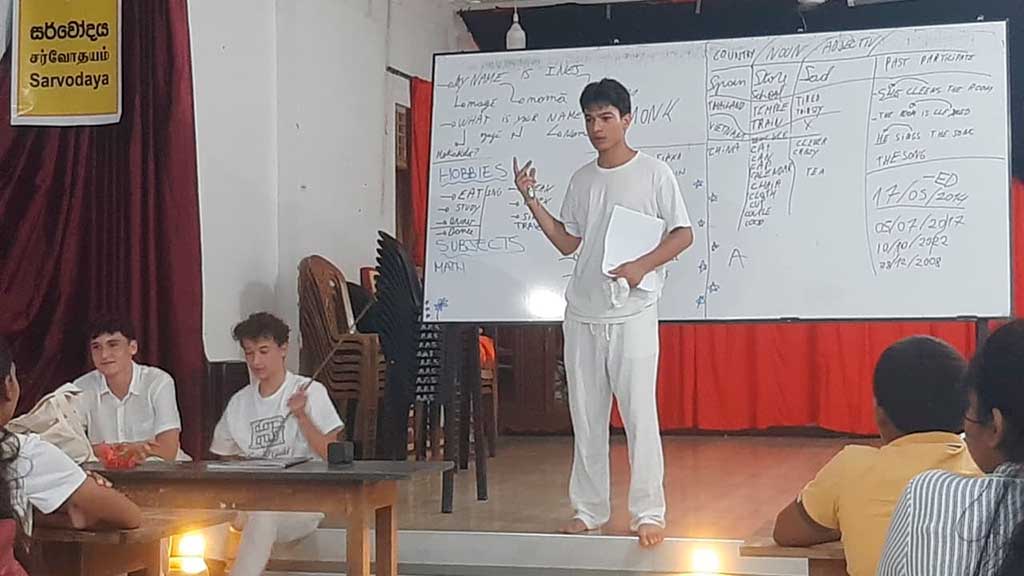
Where things stand Construction is progressing, and a new part of the project kicks off in parallel: English and Spanish classes for the villagers. What happened today The team continued the digging started the day before — demanding work, where the soil has to be broken up with a pickaxe before being cleared out with a shovel. A fifth hole was dug in the center of the site, intended for pouring cement. Mid-morning, the team paused to share a Sri Lankan meal prepared by one of the village families; throughout the day, residents regularly offered tea and snacks (fruit, small bites). In the afternoon, the team began setting up the metal structures meant to carry the cement across the site — work still in progress. At the end of the day, around 5pm, the team headed to the temple for a very different kind of contribution: at the request of the head monk, a first English class was given to interested members of the community, with very mixed levels, ranging from near-beginner to more advanced. A Spanish class was also offered for the first time, to two monks with no prior knowledge of the language. Highlight of the day One of the monks present taught himself English two years ago by listening to podcasts and videos — and this evening was only the second time in his life he’d been able to practice the language with native speakers, after a first experience the day before with one of the participant’s mothers. Following this exchange, a plan was agreed with the head monk: three levels of English (beginner, intermediate, advanced) and one basic level of Spanish will be offered every afternoon around 5pm, with residents grouped by level.
Day 3 — First day on site
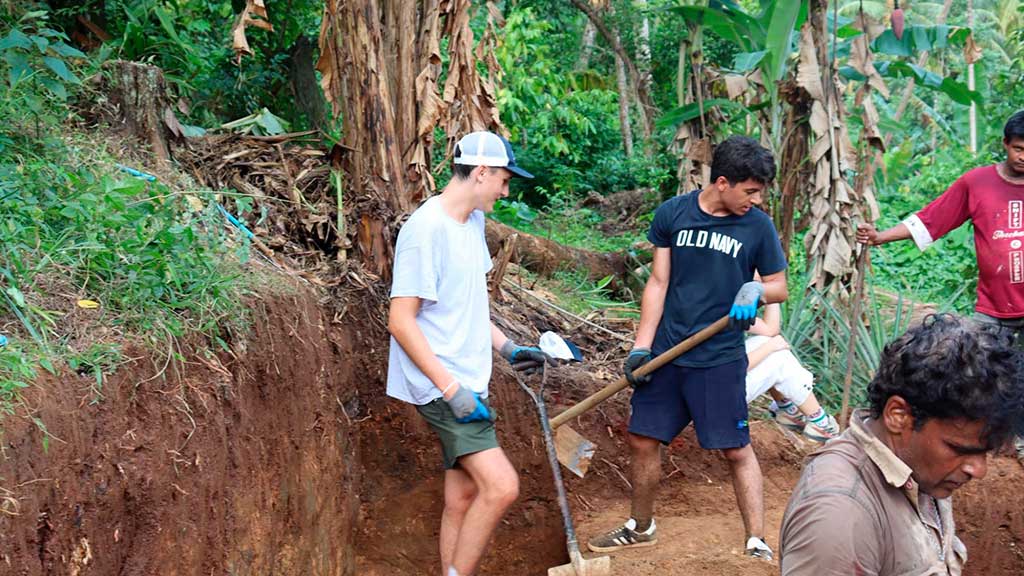
Where things stand Work on the ground officially begins, with the first step: preparing the site for the installation of the water tank. What happened today The day began at the temple around 10:10am, where the monk gave his blessings to the team, followed by a collective prayer. The group then headed to the village well, where another blessing took place, along with a speech from Bandula and the Sarvodaya team, wishing the project good luck. The team then moved to its first worksite: the planned location for the water tank. The site, located on a slope, first had to be leveled using hand tools. Once the ground was flattened, the team began digging four holes, one on each side, meant to reach a depth of 1.6 meters — by the end of this first day of digging, they had reached between 50 centimeters and 1 meter deep. Highlight of the day The monk’s double blessing — at the temple, then directly over the village well — gave a special dimension to the start of the construction work, somewhere between a technical step and a symbolic one.
Day 2 — Arrival in Pihimbuwa
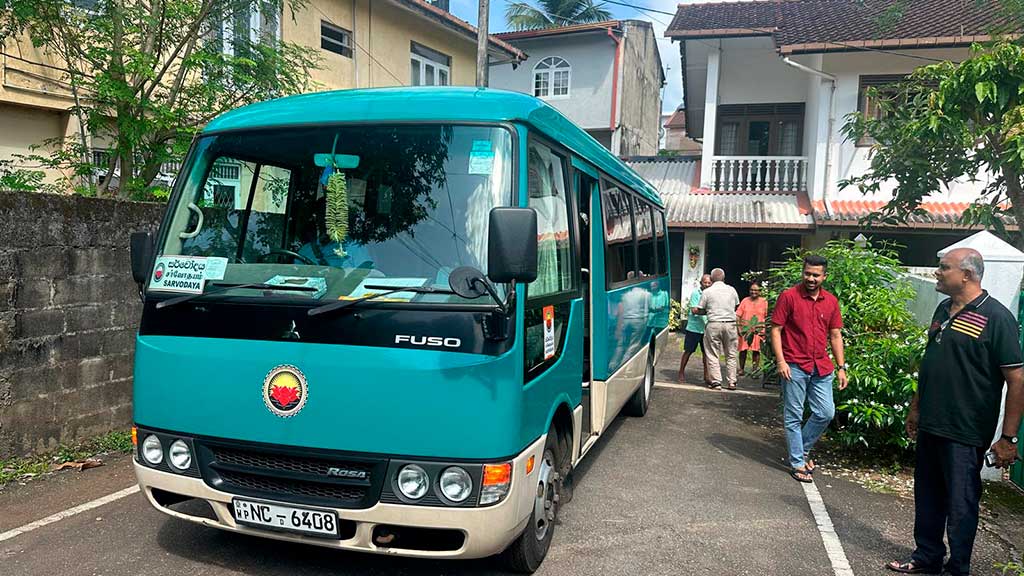
Where things stand After a morning on the road, the team finally arrived in the village of Pihimbuwa, the real starting point of the project. What happened today Departure at 10am by van, accompanied by a cameraman, Bandula, and two other members of Sarvodaya. After about three and a half hours on the road, with a lunch stop along the way, the team arrived in the village. The welcome from the residents was especially moving: traditional flower garlands, smiles, the presence of village members and the monk, and a collective blessing given by the monk to the whole team. After this welcome, the team settled in and took the time to get to know their hosts. Highlight of the day The village’s welcome as a whole — an intense moment, both warm and solemn, marking the true start of the adventure on the ground.
Day 1 — Meeting Sarvodaya
Where things stand Even before reaching the village of Pihimbuwa, the team spent a day at Sarvodaya’s headquarters, our local partner, to get a deep understanding of the organization’s philosophy and how it operates. What happened today The team visited Sarvodaya’s headquarters, where they were welcomed by several directors as well as Bandula, the project lead on Sarvodaya’s side. The day included a long briefing on the organization’s philosophy, built around the principles of economic Buddhism, village self-sufficiency, ecotourism, and the development of eco-friendly villages. This philosophy is also tied to democratic principles and the UN’s 17 Sustainable Development Goals— including access to clean water and women’s empowerment. After sharing a meal with the Sarvodaya team, the group toured the entire headquarters as well as the meditation center. The day continued with a visit to the temple, where time was set aside to discuss Buddhist philosophy. Highlight of the day A first deep dive into Sarvodaya’s overall vision, going far beyond the question of water alone: a complete community development model, discovered by the team even before setting foot in Pihimbuwa.