
Where things stand
First strikes of the pickaxe: time for the most physical part of the project, preparing the ground and laying the first foundations of the water tank.
What happened
The work began with a morning at the temple, where the monk gave his blessings to the team, followed by a collective prayer.
The group then headed to the village well, where another blessing took place, along with a speech from Bandula and the Sarvodaya team, wishing the project good luck.
The team then moved to their first work site: the location designated for the water tank. The sloping ground first had to be leveled using hand tools. Once leveled, the team began digging four holes—one on each side—intended to reach a depth of 1.60 meters; during this first day of excavation, they reached depths of between 50 centimeters and 1 meter.
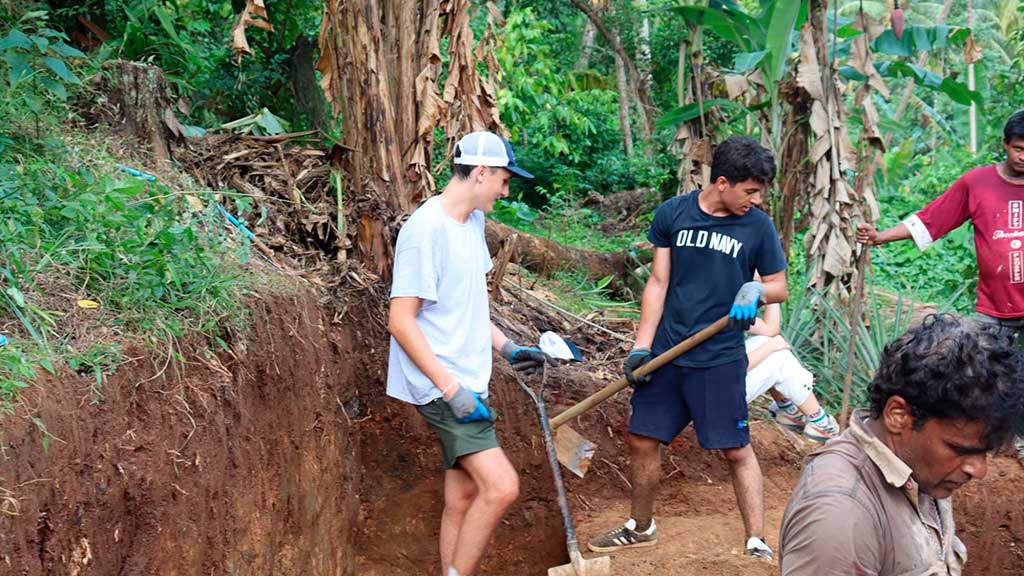
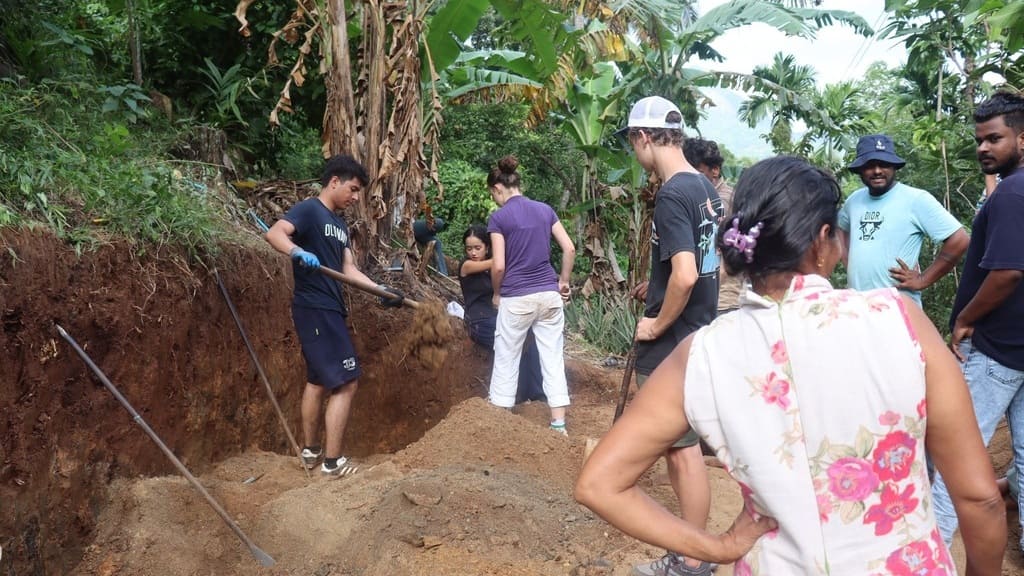
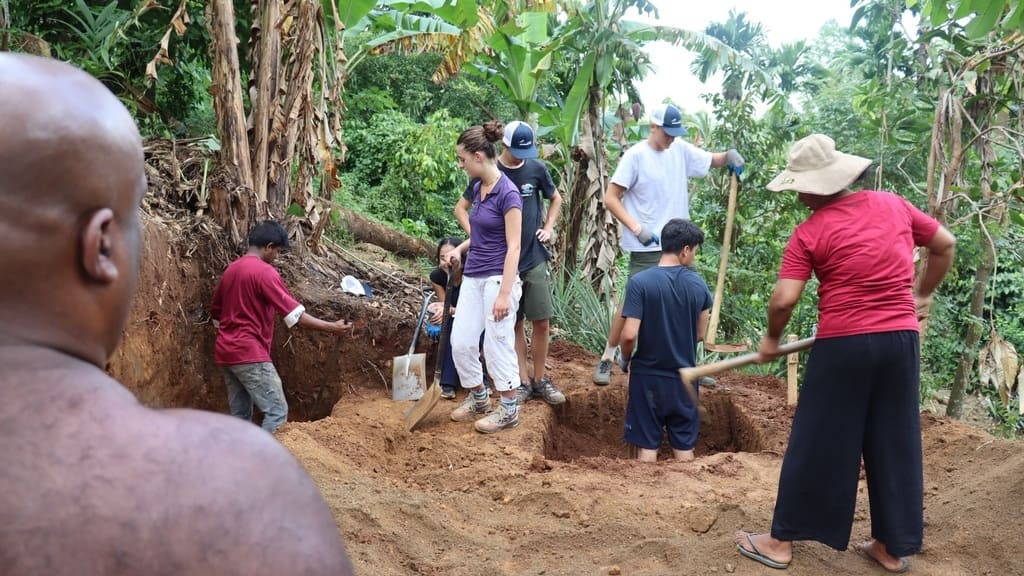

Digging the water tank’s foundations, with pickaxes and shovels
Work continued over the following days: a fifth hole was dug in the center, intended for the concrete—a demanding task in which the soil had to be broken up with a pickaxe before being removed with a shovel.
Mid-morning, the team would take a one-hour break to share a Sri Lankan meal prepared by one of the village families; throughout the day, the locals offered tea and snacks (fruit, light bites). The afternoons were dedicated to installing metal structures to transport the cement across the worksite.
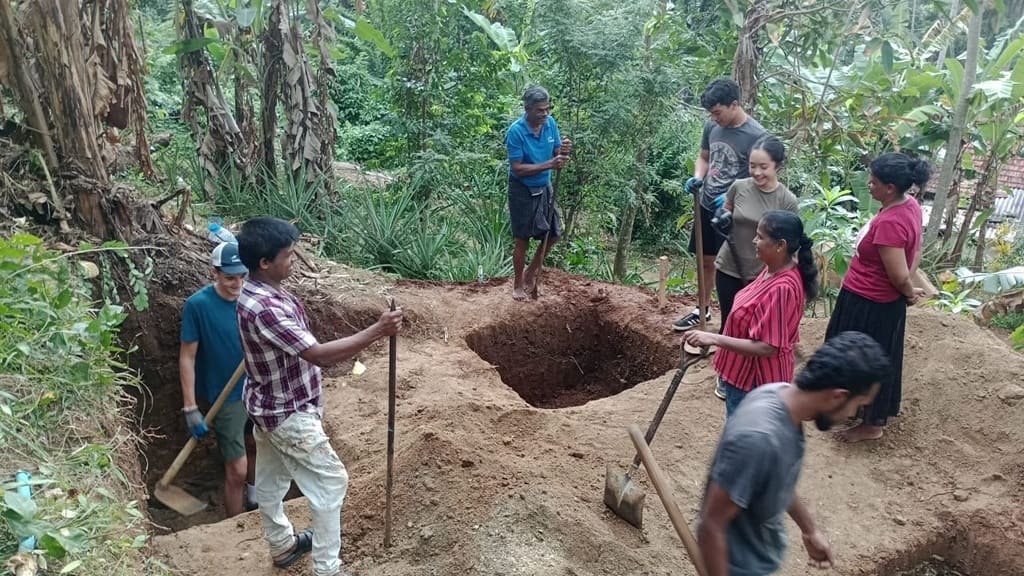
Continuing the digging, the whole team mobilized
Then came the large-scale concrete stage: the concrete, mixed on site, was loaded into buckets and carried by hand up the slope through a real human chain, to fill in all the holes dug so far — physical, collective work carried out by the whole team.
Highlight
The monk’s double blessing — at the temple, then directly over the village well — gave a special dimension to the start of the construction work, somewhere between a technical step and a symbolic one.